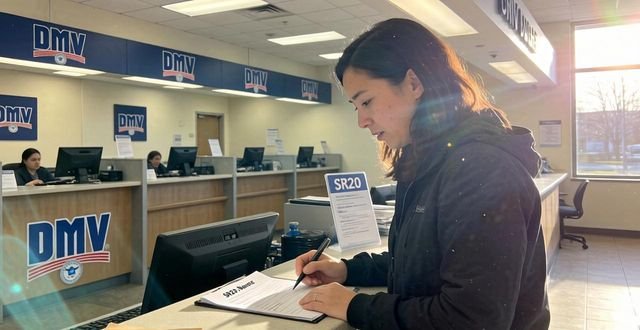
Scene: The Phone Call at 9:03 PM.
The voice on the other end is calm, official. It recites a code: “Your license suspension will be upheld unless a Form SR-22 is filed by the state’s deadline.” The room narrows. This is not car insurance. It is a state-mandated certificate, a financial tether proving you carry minimum liability coverage. Your future mobility now hinges on finding SR-22 insurance with sincere local coverage. The clock, a silent predator, begins its count. This tale is yours. The question is its ending.
Part I: The Phantom Shield – What “Local Coverage” Truly Demands.
The internet whispers of cheap, instant SR-22 filings. These are digital phantoms. A policy from a distant, faceless entity may secure the filing, but it abandons you in the physical world. “Local coverage” is not a marketing slogan. It is the concrete assurance that your provider understands your state’s unique Department of Motor Vehicles (DMV) filing protocols, its specific financial responsibility limits, and the labyrinthine process to restore your driving privilege. A failure here is not a paperwork error. It is a collapse of the very bridge back to normalcy.
Consider this analogy: You construct a dam of impressive scale, but using plans for a different river’s currents. When the flood arrives—the law’s scrutiny—the structure,however grand, will fail. An SR-22 from a non-compliant source is that flawed dam. The ensuing flood is a prolonged suspension, steeper fines, a future bleaker than the present. The fear is not of cost, but of catastrophic, irreversible procedural failure.
List of Critical Local Failure Points:
1. Wrong Filing Address: The insurer files your SR-22 certificate to the wrong state agency or branch, causing immediate administrative rejection.
2. Incorrect Liability Limits: Your policy meets national minimums but falls short of your state’s elevated requirements for high-risk drivers, nullifying the filing.
3. Lapsed Agent Knowledge: Your assigned agent is unaware of recent changes in your state’s SR-22 filing duration or mandatory forms, leading to a premature and disastrous cancellation notice to the DMV.
Part II: The Cost Vortex – A Future Perspective on “Savings”.
Human cognition seeks the lowest immediate price. This instinct, in the SR-22 arena, is a siren’s call leading to financial shipwreck. The的费用 (cost) landscape must be viewed from a future vantage point, seven years hence. Today’s “cheapest” option often carries three hidden, spiraling debts:

The Debt of Instability: Budget carriers specializing in bare-minimum filings exhibit terrifying volatility. A single late payment may trigger an automatic cancellation notice sent directly to the DMV, restarting your suspension cycle from year one.
The Debt of Exclusion: These policies frequently strip away all ancillary services. A local accident? You are navigating claims alone, against another party’s robust insurer, with no local advocate.
The Debt of Perpetuity: A filing lapse can reset your state-mandated SR-22 carrying period, often extending it from 3 years to 5 or more. The “savings” evaporate against years of added premiums.
The professional, actuarial truth is paradoxical: investing in a stable, locally-competent provider with moderately higher premiums is the only mathematically sound path to long-term reduction of total financial exposure. It is the逆向思维 (reverse thinking) solution. Pay more now to pay far less overall.
Part III: The Path of Restoration – A Sparse Guide to Action.
The suspense breaks here, not with a magic solution, but with a stark, actionable清单 (checklist). This is your application manual.
1. Verify Before You Buy. Contact your state’s DMV (or equivalent) directly. Confirm the exact liability limits and the mandated SR-22 filing duration for your specific violation (DUI, at-fault accident, lapse in coverage).
2. Demand Local Proof. When contacting insurers, your first question is not “price.” It is: “Can you provide the physical address and direct phone number of a local agent or office that will handle my SR-22 filing and be my point of contact?”
3. Secure the Certificate First, Not the Policy. Ensure the agent’s explicit, recorded commitment is to file the SR-22 certificate with the state immediately upon binding coverage. The policy start date is irrelevant if the filing is delayed.
4. Maintain Absolute Purity. For the entire mandated period, treat this policy as a sacred, untouchable artifact. No payment delays. No coverage changes. Any disturbance is a signal flare to the authorities.
The drama concludes. The stage holds two figures: the ghost of the quick online discount, pointing toward a recurring cycle of legal jeopardy. The other is the poised, if weary, individual who endured the rigorous search for true local expertise, now holding a valid license and a clear horizon. Their paths diverged at a single, critical juncture: the recognition that an SR-22 is a state dialogue, and only a local voice can properly speak your part. Your next line is yours to utter.
No Comments
Be the first to share your thoughts on this article.